
New international award defines excellence in health planning
What does world-class health planning look like? For the first time, this question has been explored through an international assessment of excellence in health planning, as Rhonda Kerr, Jonathan Erskine and Jaime Bishop explain.
The inaugural Excellence in Healthcare Planning Award was presented as part of the European Healthcare Design Awards at a prestigious ceremony during this year’s European Healthcare Design Congress. But what constitutes health planning and why did the Awards merit a dedicated category in this field?
Health planners work with communities, clinicians, health service providers, architects and infrastructure development teams to deliver plans for effective health services and health facilities. A competent health plan delivers evidence-based, researched, well-informed solutions for health system issues, clinical service delivery, non-clinical supports, and the infrastructure required to improve equity, advance population health, and enhance the effectiveness and efficiency of health systems.
It was both an honour and a delight to be part of the judging panel for the Excellence in Healthcare Planning 2026 award category. Many high-quality nominees from across the globe made the shortlist in this category, with each team approaching the challenges of delivering necessary care to communities using well-developed health planning tools and exhibiting great sensitivity. Each was presented with different challenges ranging from large numbers of patients in difficult climatic conditions, to reducing unacceptable infant mortality, to preparing for an uncertain future.
All nominees addressed how the delivery of hospital care is likely to change over time with clinical improvements, technological change and innovation. A great sensitivity to workforce needs, the effectiveness of healthcare, and ongoing operational costing were all evident in finalists’ presentations. Each finalist was also well-attuned to the communities their facilities were to serve and their specific challenges. In tertiary facilities, for example, there was evidence of conduits for medical research and teaching spaces in clinical areas. The link between medical research and planning for health services was made clear by the physical connections and the space for clinical needs to influence medical research and vice versa.

What does excellence in health planning look like?
The Excellence in Healthcare Planning Award identified key elements of excellence in health planning to be interrogated and evaluated, including:
- Model of care development – examining the methodologies used to determine contemporary and emerging models of care. Responsiveness to patient need, demand changes, equity, patient safety and human dignity were also investigated.
- Future readiness and evidence-led redesign assessed how clinical pathways and clinical models anticipate future health needs, digital, workforce and population change, ensuring services can adapt, scale and remain resilient. Also explored was the strength of evidence, data, and research, including demographic, morbidity and epidemiological data, used to inform decisions and alignment with clinical priorities.
- Access, capacity and operational efficiency analysed how new models of care and clinical pathways improve access for patients, the anticipated reduction in waiting times alongside any anticipated operational and clinical efficiencies. Optimising pathways to enhance patient and clinical experience and operational efficiency in the short to medium term was also examined.
- Flexibility and system integration into planning were scrutinised for adaptable and scalable responses to future health trends, population change, digital health and technological evolution, along with integration within wider healthcare networks, communities and cross-sector partnerships.
- Stakeholder engagement processes were reviewed for effectiveness, integration, and co-design throughout the planning process – the ability to build trust and ensure the final model of care or pathway reflects the evidence and needs of users and partners while supporting timely decision-making, shared understanding and alignment of priorities.
Nominations from across the world were assessed based on predetermined criteria, which were further tested by detailed informative presentations. The judges’ questions teased out the active elements of the quality and craft of professional health planners.
Thoughtful, attentive, considerate processes defined each of the finalists. There was a high level of intellectual independence and evidence of processes to resolve health problems by invigorating health services to enable effective future service delivery.
The judges were impressed by the agile responses to some of the major challenges our health systems face, including workforce retention and the powerful effects of climate change on hospital facilities and human health. These responses were more than the clients had asked for but added to the strength of what was delivered for future effective health service delivery. And no project stood alone – each of the four finalists were intimately aware of and integrated with the broader health service context.
Managing the huge surges in patient numbers from all over the world at the Hajj and Umrah pilgrimages, while conscious of the heightened risk of infectious disease, the highly commended Al Ansar Madinah project in Saudi Arabia sought to balance the needs of an older patient group with the need to maintain a reliable local acute health service. The health planners provided clever, nuanced solutions ‘’to create an elastic, flow-based hospital capable of absorbing variability in patient volume, acuity, infectious risk, and climate-related illness without compromising safety, dignity, or operational clarity”.
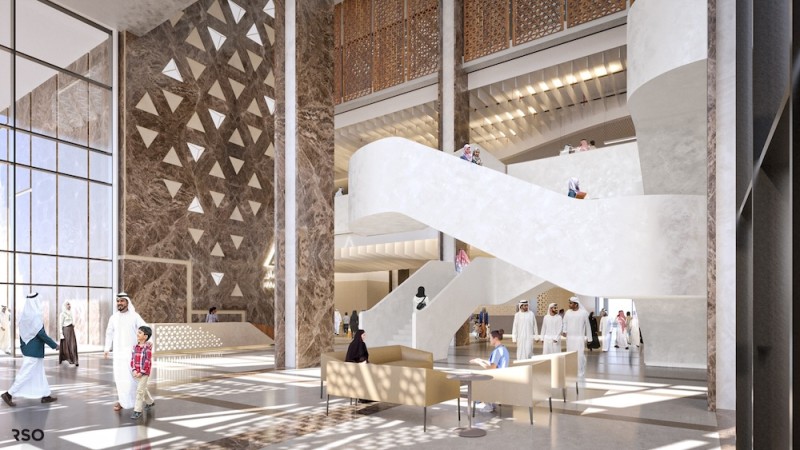 Al Ansar Madinah, Saudi Arabia
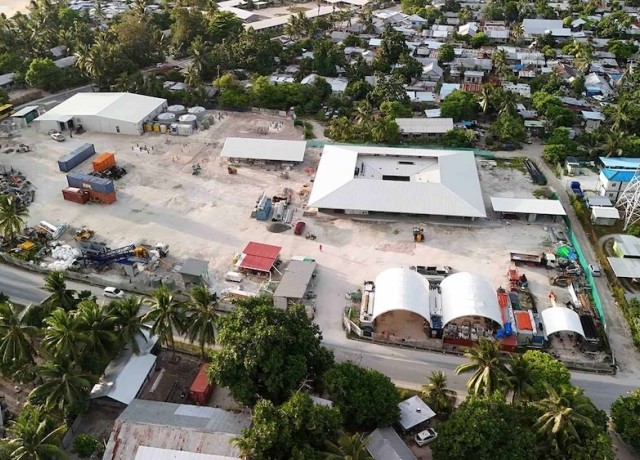
Contrasting in scale was the overall winner of the category, the New Betio Hospital, described as a remote, small-scale project in Kiribati in the Pacific designed to create a safe environment for obstetric and paediatric care, as stage 1 of a new hospital. The power of health planning to improve the health of a community was most vividly displayed in this project.
Challenged by remoteness with its impact on health outcomes, access to clinicians, limited technologies, fly-in medical services, and logistical difficulties, health planners shaped culturally appropriate health services while enabling a well-designed facility to be built.
Exquisite care and attention were paid to the needs of the community for access to clinical care, cultural safety, major workforce challenges, and rising sea levels. Betio is 900 metres wide at its widest point and 5 metres above sea level. This project has a clear pathway to deliver significant improvements for unacceptable maternal and child mortality.
Planners of the New Betio hospital overcame significant challenges in stakeholder engagement during the pandemic, by undertaking determined efforts to engage a range of community groups and laying the ground for future development of the same site to enhance services and embrace new technologies.
 New Betio Hospital (Stage 1), Kiribati
Reflecting the diversity of health planners’ work, Skåne University Hospital impressed the judges and was awarded a high commendation. The development of the new hospital model was guided by four core planning principles: patient safety; flow efficiency; sustainability; and knowledge and development. These principles formed the foundation for all planning decisions, ensuring that improvements in efficiency, flexibility and sustainability never compromised patient safety or quality of care. Planning was focused on patient outcomes with 100 clinical indicators identified to evaluate the project throughout its development. These indicators addressed patient safety, clinical efficiency and patient experience, and continue to inform the hospital’s ongoing post-occupancy evaluation.
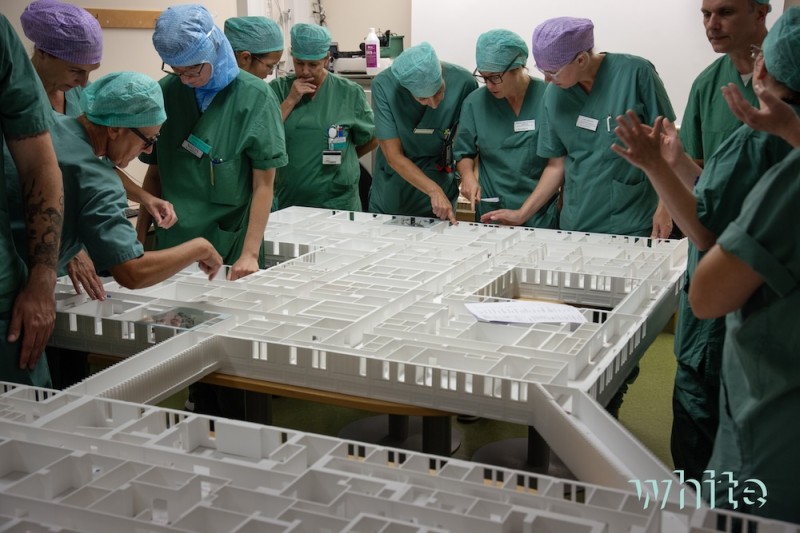 NSM, New Hospital buildings, Sweden
New Footscray Hospital was also highly commended and added another dimension. In this project, health planners sought to embed health and wellness for a culturally diverse population, using a village green at the centre of the development. Patient journeys were mapped from community referral and emergency department presentation through inpatient care, rehabilitation and discharge. These mapping exercises informed adjacencies, circulation paths and service clustering, reducing transfers, minimising handovers and improving staff efficiency. Ambulatory services were consolidated to support an ambulatory-first approach, reducing avoidable admissions and strengthening chronic disease management.
Digital readiness underpins the model, with infrastructure supporting integrated electronic medical records, telehealth, remote consultation and data-driven monitoring. These systems enable care beyond the hospital footprint and support evolving workforce models.
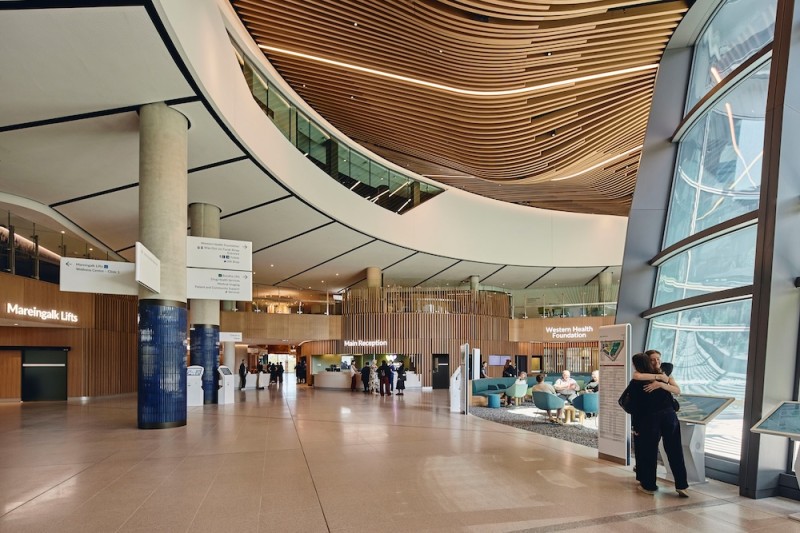 New Footscray Hospital, Australia
Allow time to plan for success
Most of the hospital projects in the category were planned over an extended period owing to the pandemic. For many projects, the extended research and planning periods, augmented by detailed consultations, allowed health planners time to develop highly responsive, evidence-based outcomes embedded in the cultural complexities of the communities. There are clear benefits to projects – including more time to thoroughly plan health service delivery and its interface with building construction.
Conclusions
The judges were impressed with the wisdom of the responses to important health challenges. Each finalist undertook a structured, evidence-based methodology integrating data analysis, stakeholder workshops, benchmarking, co-design and operational simulation. Patient outcomes and workforce satisfaction were key to the best projects.
The power of health planning was evident in the submissions, as well as the presentations and interviews – more than justifying the introduction of the category in the Awards programme. Health planners make an important contribution to quality improvement in the delivery of healthcare to a population, and the effectiveness and function of health infrastructure. Working closely with aspirational clinicians and highly specialised architects, health planners define the change necessary to deliver effective care for patients.
In subtle ways, health planners managed to invest complex health problems with clear logic and thoughtful attention for the benefit of their project teams. Overall, this category award highlighted the powerful collaborative and knowledge-building work of health planners, often the unsung members of the health infrastructure delivery team. Moreover, the craft and knowledge of health planners have been shown to enrich a project and deliver real ongoing economic benefits for their communities.
The judges were disappointed that there could be only one outright winner of this inaugural prize, as all the projects reviewed were of high quality – and the four finalists, in particular, embodied excellence in health planning worthy of commendation. Building on this first award, the judges wish to encourage more health planners to submit their work and projects in subsequent years. Ultimately, we want to demonstrate how well-resourced health planning improves healthcare and hospital projects.
The shortlisted entries
Excellence in Healthcare Planning Award (Supported by NORR)
- Winner: New Betio Hospital (Stage 1), Kiribati
Commissioned by Ministry of Health and Medical Services (Kiribati)
Led and developed by Jacobs - Highly commended: Al Ansar Madinah, Saudi Arabia
Commissioned by Ministry of Health KSA
Developed by RSO Architecture - Highly commended: New Footscray Hospital, Australia
Delivered by Plenary Health consortium, with VIDA Health and Western Health
Developed by COX Architecture + Billard Leece Partnership - Highly commended: NSM, New Hospital buildings, Sweden
Commissioned by Region Skåne
Developed by White arkitekter
About the authors
The authors of this article – and judges of the Excellence in Healthcare Planning Award – were:
- Lead author and lead judge: Dr Rhonda Kerr, executive director, Economics, Health Services and Planning, Guidelines and Economists Network International (GENI); convenor, Australasian Association of Health Planners; chair, Body of Knowledge Committee, Australasian Association of Health Planners; and honorary research fellow, University of Western Australia.
- Co-author and panel judge: Jonathan Erskine, honorary professor, Bartlett School of Sustainable Construction, UCL; and executive director, European Health Property Network.
- Co-author and panel judge: Jaime Bishop, chair, Architects for Health, UK; and director, Fleet Architects.
The Call for Entries for the European Healthcare Design Awards 2027 will be launched in November 2027.
Event news

Actions to improve urban renewal and health equity
2nd September 2024
A vision for Liverpool: Putting people’s health first
2nd September 2024
Investing in urban renewal and health equity
21st March 2024
Health equity: Marmot Cities
20th March 2024